Category: Uncategorized
-
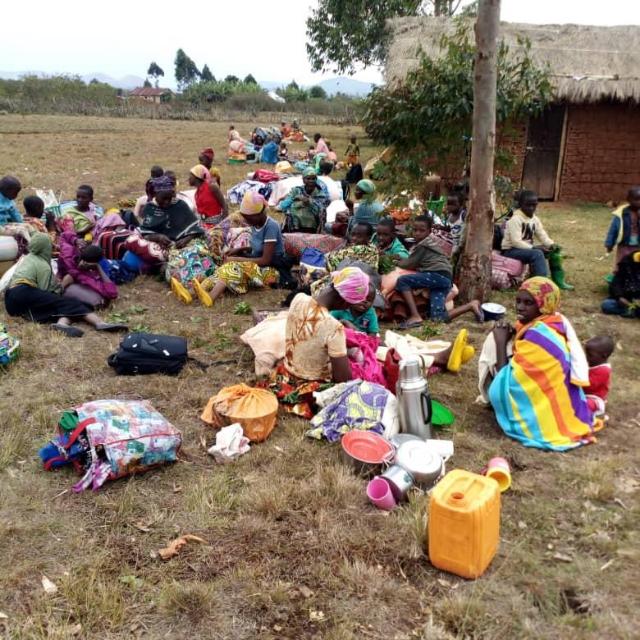
The 70.8 million are People: I am one of them!
In 1994, I was forced to leave my home country D.R. Congo. On this long and arduous journey, I have been asked repeatedly why I am one of the many millions of people who have been forcibly displaced. The more I try to explain and continue to do so even to this day, the more hurt and humiliated I feel. Little weight is given to the root cause of my displacement. I have sometimes been terrorised, imposed, or forced to minimise or bend the reasons for my eviction. My case and many more cases are simplified or deprived of its meaning and is simply called “refugee crisis”.
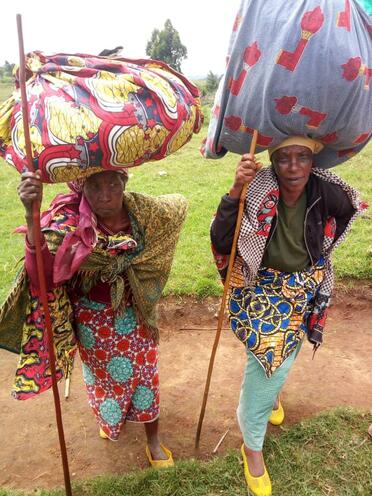
As for the readers of my story, please may I graciously ask you to remember that I am not another number not to be mentioned when COVID-19 covers the front pages of all media without dedicating one paragraph to refugees and the forcibly displaced. I am a human being like rich and poor currently locked in by fear of being contaminated or grieved by the loss of their loved ones. I equally deserve protection and dignity like any other person, no matter the circumstances.
Besides pinning the “Why?” for my multiple displacements in two different continents, this reflection is a narrative of our family’s journey for more than two decades. We have experienced and still experience hatred, discrimination, the killing of loved ones, fear for our lives, the risks of extermination and the genocide of my beloved community. Worse now, psychologically tortured by what would happen to my locked in family and millions of refugees living already in unhealthy conditions and overcrowded in refugee camps at the outbreak of COVID-19. You want me not to care at all? Or how is the Body of Christ responding to this silence?
In most cases, some governments consider refugees as a burden. This is not a new assumption, and to some level, surely they can be when human and dignifying decisions are not taken into consideration. I am trying to closely zoom in DRC, Burundi, Kenya, Rwanda and Uganda, which are much closely connected to my history of displacements. Who cares for the millions of refugees hosted in different refugee camps in these mentioned countries when the whole world is at its knees by fear and helpless effort to curve Coronavirus? Who is thinking about us?
My community is called Banyamulenge. One on the top list of people under genocidal threat. For Banyamulenge of South Kivu (DRC), the “Never Again” campaign (post-Rwandan genocide in 1994) is merely a slogan. Since December 2019, the Banyamulenge community have seen 120,000 of their cattle looted, hundreds of people have been killed, 300,000 people have been forcibly displaced, more than 200,000 villages have been burnt down. That community desperately and urgently need your prayers and support; but who cares?
This reflection calls each one of us as the Body of Christ to action. We are to both individually and collectively respond by praying to Abba Father to hear our heart’s cry for every precious man, woman, child, and a little baby who has been forcibly displaced. As the Bride of Christ, we can’t afford to remain indifferent. We are to respond by demonstrating the love of Jesus, and we are to apply Biblical principles in our behaviours and standards. Let us take a moment to look together at Leviticus 24:22 “There shall be one standard for you; it shall be for the stranger and for one from your own country; for I am the Lord your God.”
There is only one standard, and it merely means equality for both the people who have been forcibly displaced and the hosting communities. Is this applicable currently in the countries with the highest numbers of refugees? It is scary or sad to mention that in few countries in the Great Lakes Region where preventive measures are being taken against COVID-19, no mention at all by the leadership on how millions of refugees will be protected.
On many occasions, I have thought to myself that I would probably be a Hindu or belong to the Muslim faith if I happened to have been born in India. Or perhaps Bengali would have been my mother tongue if I was born in Bangladesh. With tears in my heart, I think about the fate of the Dinka and the Nuer tribes of South Sudan, the Banyamulenge of South Kivu, the Rohingya, or the Syrians from Aleppo and Idlib to name just a few. Who among those tribes mentioned chose to belong to that history or originate from those torn apart regions by ethnic, religion or tribal conflicts?
From the early days of my childhood, I have carried shame and experienced humiliation because of the harsh rules imposed by hosting countries which have left my family and I waiting on the sidelines. It has been difficult for me to carry a manipulated and distorted history which has forced me on the long refugee highway.
From the day when I was forced to leave the place, I call home more than two decades ago, the language of hate has worsened in South Kivu, DRC. This is a permanent reason for my displacement. During this time, the Body of Christ, the humanitarian organisations, and governments have remained silent. Daily, I ask myself “Where is hope?”; “When will my journey end?” Giving a satisfying response to my wife and my children remains the hardest, not only for me but for many refugees.
In the different countries of my displacements, the Universal Declaration of Human Rights has mostly been only a document, which you can read, rather than practice. I have been rejected by my home country, and I have been considered a second class citizen. When part of my identity is undermined, the rest of it cannot be dignified. Amin Maaluf, a Lebanese-born French author, said that the identity can’t be compartmented. Along the refugee highway, I haven’t been allowed to live my identity as I am. Why should I be a second class citizen if Leviticus 24:22 is practised and understood by all? Can the church hear the cry of refugees in their land? How can the Body of Christ hold the lawmakers accountable for those inequitable policies?
If I had a choice, and so could everyone else we would definitely choose what is best for ourselves and our children. The first day I set foot out of my country, due to the brutality of war, little did I know that being a refugee would come with the most problematic aspects of life, then war itself. What makes everything worse is when you live in a country that has friendly laws on papers, but chooses to continually alienate and discriminate those they willingly chose to “protect” if not to “exploit”.
The bottom line is that I have found myself with no shoulder to lean on. Therefore, there is a constant worry filled with fear of the unknown. Anyone can falsely accuse you and take advantage of your status; since the brutal truth is that even the church does not seem to really care. What measures are being taken to protect 70.8 million (refugees)? They are people, not numbers. I am one of them!
-
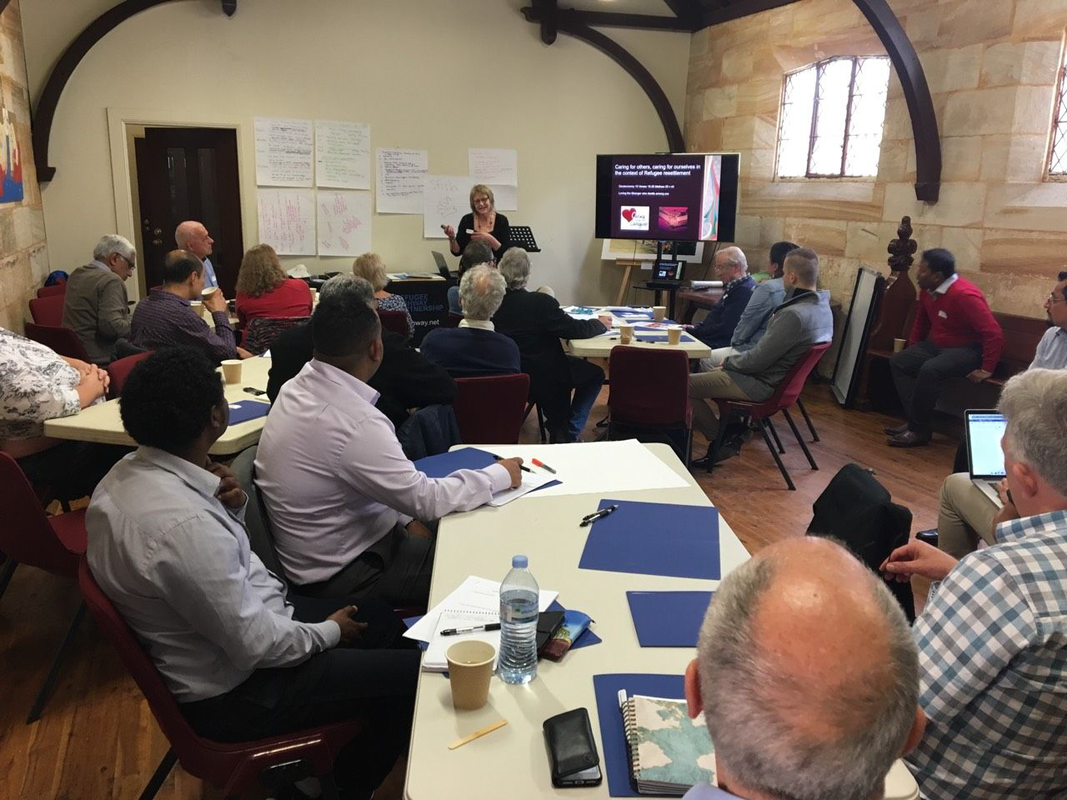
Oceania RHP Roundtable
Written by Kaisa Golding, RHP Oceania Co-Facilitator
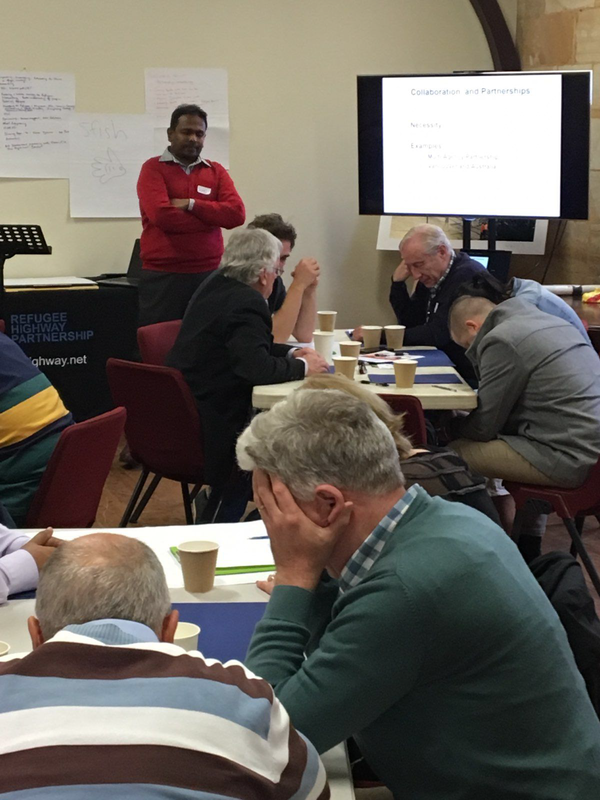
RHP Oceania 2019 Roundtable
The first annual Refugee Highway Partnership Oceania Roundtable was held on October 10-11, 2019 at the Garrison Church in Sydney, Australia. Hosting approximately 30 participants from a variety of churches and faith-based organisations, as well as a few individual refugee response players, the conference was well received and plans were put in place for further annual Roundtables.
Speakers at the Roundtable included: James Grunau from Journey Home (Canada), a member of the RHP Leadership Team; Judi Bastin from Migrant Pacifica Education/ESOL at Mairehau Primary (New Zealand) and RHP Leadership Team member; Jude Simion from BREAD and RHP Global Leadership Team; as well as Angus Skeoch from Restore Mission (PNG) who is also the South Pacific RHP Representative. The conference spanned two days, including dinner together after the first conference day.
The Roundtable concluded with plans to hold the 2020 Annual Roundtable in Melbourne, Australia. There was general positivity for more active connecting among the participants and a contact list was created and shared among the participants after the conference. Participant feedback was very positive and there was a general consensus that the Roundtables added value to the important work they were doing among refugees and asylum seekers. -
RHP Middle East and North Africa Round Table
2/10/2019 by Gordon Showell-Rogers
Introduction
The size of the problems and the stories of suffering are overwhelming. It’s increasingly unlikely that Syrians and Iraqis will ever return home; very few will move to the West. The pressures on the infrastructures in Jordan and Lebanon (for example) are awful: as is the haemorrhaging of hope.
The parallels with the Palestinians in the region are striking. Children are highly likely to become grandparents before any lasting solution is found (if it ever is).
In the chaos and sadness, 20 amazing people from various countries, working in Egypt, Palestine, Jordan and Lebanon met to discuss their heart-concern for the forcibly displaced in MENA: and it was wonderful to have youth specialists contributing to the creativity and passion in the room.
Awful stories abound.
One Iraqi Christian woman shared the family’s pain and suffering since being driven from their home at one hour’s notice. It was deeply moving to hear her telling the story of her father who had faithfully served the nation and people of Iraq, as a university professor in Mosul, for 40 years. He struggled to absorb the shock, as he was forced to leave his work, his home, his belongings and so many memories, or be killed, simply because of his Christian faith and died of a heart attack, after months of ill-health after arriving in Jordan. His son-in-law testifies ‘I struggle that I can’t provide for my kids when they ask me for things’ and ‘I want a future for my children’
Light in the darkness
The churches and agencies represented are doing astonishing work, caring for children, teens, adults, old people, whole families, with dignity and respect, seeking to empower struggling people in various ways: from sewing lessons to art therapy, from simply listening to job creation, from advocacy to upskilling, from simply being a friend to business creation.
The strain on the carers is immense, as they move beyond immediate relief to long-term palliative care.
Shared concerns
The mutual respect and consensus in the room were tangible, remarkable even in a region in which mutual suspicion is common-place.
There seemed to be consensus that the crisis is not going to end, but that it will last until Jesus returns. So there is a need to think strategically, to work together and to agree achievable milestones, so that hard-pressed labourers are able to persevere.
Deep concern was expressed about short-term missions not coordinating properly with locals.
Outcomes of the meeting
Before the end of the gathering, a small (executive) Team, representing Egypt, Jordan, Lebanon and Palestine had formed and agreed to start small steps towards developing an
RHP MENA, which would intentionally include others not at this meeting and which would seek to be a: Network of churches and NGOs (a revolutionary idea in the region)Community of PracticeUnified Voice, advocating for the forcibly displacedSpace to agree and promote Best Practice for refugee-work in the region
Immediate ‘take-aways’ mentioned
Youth For Christ (YFC) Lebanon said: ‘we are excited to discover Al-Hadaf (a brilliant Jordanian work with refugees) and we are keen to explore ways of working together for youth in the region’
Heart for Lebanon (working with refugees there) said: ‘we have known the Bible Society of Jordan for years but didn’t know about their planned new Trauma Centre. This will be a wonderful resource for us’.
Evangelical Council of Jordan said: ‘we will promote World Refugee Sunday, using RHP’s materials and the journalistic skills represented on the Council’s Board’ -
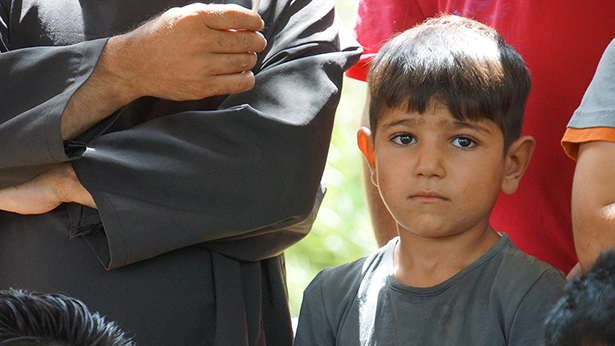
WEA Ambassador for Refugees Visits Refugee Camp in Turkey
IAFR President (Tom Albinson) visited a camp in southeast Turkey that hosts 4,000 refugees from Iraq. The people are all from the Yazidi minority ethnic group. They fled to Turkey in August 2014 to escape attacks by Islamic State (IS) militants. They shared horrific stories of torture and murder. Many of their wives and daughters were carried away by IS as slaves.
A small local church in Diyarbakir, Turkey, has been faithfully serving the refugees by hosting and coordinating medical teams, distributing food, providing refrigerators and more. The local pastor told Albinson that this kind of work is new to them and they don’t really know what they are doing. He asked for training and help as the needs are great and the work is weighing heavily upon church leaders.
As Albinson also serves as Ambassador for Refugees with World Evangelical Alliance (WEA), he put together a team that included a key Christian leader from Bulgaria, and another from Sri Lanka (Executive Director of WEA’s Religious Liberty Commission). Together they visited with the refugees and the camp administration to get a first hand understanding of the challenges they face. They then met with local church leaders to explore how the church-at-large might come alongside of them to help with long-term response.
Albinson says, ” In my 35 years of serving refugees, I cannot remember meeting with a more traumatized group of refugees. Their plight is complicated by regional politics. While other refugees from Iraq and Syria receive formal refugee status in Turkey, the Yazidi people presently have no such status from either the United Nations (UN) or the Turkish government. They do not see returning home as an option. They do not have the option of staying long term in Turkey. They do not have access to the UN refugee resettlement program. Many told us that they feel their only option is to risk the dangerous journey to the European Union (EU) and try to get asylum there.”
Albinson plans to return within the next 6 months to offer some basic refugee ministry training to the local church. In the meantime, IAFR and our friends at WEA are trying to figure out ways to advocate on behalf of these dear people so that they can find a place to settle and begin rebuilding their lives.